Showing posts with label crime. Show all posts
Showing posts with label crime. Show all posts
Tuesday, May 7, 2013

Monday, April 8, 2013
Should We Be Zoning With Crime in Mind?
Our central finding is that blocks that include both residential and commercial zoning exhibit less crime than blocks that are zoned exclusively for commercial use. This result suggests that including some parcels with residential-only zoning on blocks that are otherwise zoned commercially might reduce crime. We also find that crime rates are lowest in residential-only blocks, even in relatively high-crime neighborhoods.
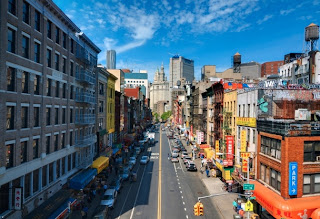
So, Anderson and colleagues conclude, "residential parcels seem to reduce crime in commercial areas." Exactly why that's the case remains an open question, though the researchers did weigh in on some of the more popular theories proposed over the years. Jacobs's "eyes on the street" got little support from the data (for instance, bars attracted eyes but also crime), while Wilson and Kelling's "broken windows" got quite a bit of support (things like litter, glass, and garbage were associated with crime too). The researchers leave that for others to address in time; for now, the idea that zoning might not just influence the nature of a neighborhood but also its safety, is enough food for thought.
REDUCING CRIME BY SHAPING
THE BUILT ENVIRONMENT WITH ZONING:
AN EMPIRICAL STUDY OF LOS ANGELES
http://www.theatlanticcities.com/neighborhoods/2013/04/should-we-be-zoning-crime-mind/5217/

So, Anderson and colleagues conclude, "residential parcels seem to reduce crime in commercial areas." Exactly why that's the case remains an open question, though the researchers did weigh in on some of the more popular theories proposed over the years. Jacobs's "eyes on the street" got little support from the data (for instance, bars attracted eyes but also crime), while Wilson and Kelling's "broken windows" got quite a bit of support (things like litter, glass, and garbage were associated with crime too). The researchers leave that for others to address in time; for now, the idea that zoning might not just influence the nature of a neighborhood but also its safety, is enough food for thought.
REDUCING CRIME BY SHAPING
THE BUILT ENVIRONMENT WITH ZONING:
AN EMPIRICAL STUDY OF LOS ANGELES
http://www.theatlanticcities.com/neighborhoods/2013/04/should-we-be-zoning-crime-mind/5217/
Monday, February 11, 2013

Thursday, February 7, 2013
Monday, January 28, 2013
Thursday, January 17, 2013
Sunday, January 13, 2013
Detroit Tops The 2012 List Of America's Most Dangerous Cities
“If you want to change crime at a place you have to change the nature of the place.”
Roman said urban homicides tend to come in four forms: Women killing their children, family members killing each other, people killing other people they know, and “stranger crimes,” such as killings committed during a robbery or a drug deal gone bad. This last category is dwarfed by the other three, he said, and getting smaller all the time. Better policing has a lot to do with it, plus inventions like the cellphone, which has reduced the number of affluent customers wandering into dangerous parts of town to buy drugs
Detroit, where mobsters brought in Canadian whiskey by the boatload in the 1920s, is now a major transit point for foreign-sourced Ecstasy and other drugs, Hakala said.
http://www.forbes.com/sites/danielfisher/2012/10/18/detroit-tops-the-2012-list-of-americas-most-dangerous-cities/2/
Roman said urban homicides tend to come in four forms: Women killing their children, family members killing each other, people killing other people they know, and “stranger crimes,” such as killings committed during a robbery or a drug deal gone bad. This last category is dwarfed by the other three, he said, and getting smaller all the time. Better policing has a lot to do with it, plus inventions like the cellphone, which has reduced the number of affluent customers wandering into dangerous parts of town to buy drugs
Detroit, where mobsters brought in Canadian whiskey by the boatload in the 1920s, is now a major transit point for foreign-sourced Ecstasy and other drugs, Hakala said.
http://www.forbes.com/sites/danielfisher/2012/10/18/detroit-tops-the-2012-list-of-americas-most-dangerous-cities/2/
Rollin Detroit: Gangs, drug dealers, decline of the economy
Once upon a time, Detroit was the heart of the American Dream. Good jobs, big cars, and the world's most profitable companies placed the city at the heart of the global economy. But as this empire of cars began to crumble and the jobs evaporated, Detroit became the crime capital of America, and a new business, illegal drugs, took over the economy. Now the city lies in shambles: Detroit is the poorest and most violent major city in America. The heart of the American Dream has been shattered. From corrupt narcotics cop Henry Marzett to the infamous Young Boys Inc, White Boy Rick, and the Best Friends Murder for Hire gang: see the Kingpins and Killers that called Detroit home and became the Henry Fords and Lee Iacoccas of a new generation. What happens when the Ceo's and Politicians fail in their plans? It's called DETROIT.
Lose purpose, focus, no engagement in an institution, high school, college, unemployed.
Change your culture. Change your neighborhood. Because when you go back, you go back to the same dirt. Morale in the city is very low.
"Everyone is desperate."
Snowball effect of there not being a real economy in the city. By the time they're 19, they've already ruined their lives.
People need to build Detroit, not tear it down anymore.
Friday, January 11, 2013
How Economic Segregation Spreads Crime Like a Virus
In my last blog post, I wrote about how much we may be able to learn about effective crime prevention by comparing experiences across cities. The following week, I had a fascinating exchange with Richard Florida about which elements of city life are most important in preventing crime.
Our discussion prompted me to take a step back and ask: “What is the most important element of a place with respect to crime and public safety?” To answer, I’d like to conduct a thought experiment showing that economic segregation leads to the worst crime outcomes and that the best way to reduce crime is to find ways for the rich and poor to live next to each other. This is not based on some utopian fantasy, but rather on logic.
Crime is contagious. Of that, there is little doubt. A central predictor of crime levels in a neighborhood is how much crime there is in the neighborhood next door. Communities that share borders share crime (technically, this is known as spatial autocorrelation).
Over the past few decades, criminologists have become convinced that places can make people more crime-prone than they otherwise would be. Fix the place, and the people will be safer. For instance, a place with lots of alcohol outlets will almost certainly have more violence than an otherwise identical place with few places to buy liquor.
The best analogy is the spread of a virus. Each individual exposed to a virus has some chance of getting sick, but those with weaker immune systems have a greater risk of falling ill. Places bear similar risks. Certain features—poverty, density, isolation—put some places at greater risk of more crime and violence.
Here is the thought experiment: Suppose we set up the worst-case scenario, one where cities have no recourse to reduce crime other than arranging where people live. And suppose a city was assigned a set number of high-risk (economically disadvantaged) places, a set number of low-risk (highly prosperous) places, and some in between. Now we ask, how should the city arrange those places to create the most safety and the least amount of crime?
The answer is surprising. While we know that isolating our poorest residents is really bad for them, it turns out that segregating the rich and poor leads to the worst outcomes for a city as a whole. Economic integration, where the rich and poor live side by side, leads to the safest cities.
To test this hypothesis, I have borrowed some Brookings Institution models describing the spread of viruses. Working with our D.C. Crime Policy Institute, the Brookings scholars determined that at least 70 percent of crime in Washington, D.C., is due to contagion (the spreading of crime like an epidemic).
How does that work? Below, I describe a city as a 10 X 10 grid. Each of the 100 cells in the grid is a neighborhood. The neighborhoods have some intrinsic ability to fight a crime infection. The dark shaded areas are the most isolated, poorest, densest neighborhoods—and for this very stylized model, I assume they are all infected with the crime bug. The in-between areas (the lightly shaded areas) have a 25 percent chance of becoming infected if they are "exposed" to a neighboring community with high crime. The prosperous neighborhoods (the unshaded areas) are far more resilient; they only have a 5 percent chance of being infected if exposed.
First, let’s consider a perfectly segregated city. All the high-crime neighborhoods are in the same part of the city. All the prosperous places are physically isolated from the high-crime places by the in-between neighborhoods.

Now, let’s explore how an epidemic spreads. Below, we look at a section of our city where the infected places interact with their healthier neighbors. Infected neighborhoods are identified with a number, the in-between neighborhoods with a letter, and the prosperous areas are blank.

I assume there is a one-in-four chance that a high-crime neighborhood will infect its next-door neighbor, and thus every fourth "in-between" neighborhood touching an infected neighborhood becomes infected itself. Place 1 touches place A and place B. Place 2 also touches place A and B, so place B is the fourth neighborhood touched, meaning it becomes infected. Following this pattern, the bold letters below indicate the neighborhoods that become infected.
Place 1—A, B
Place 2—A, B, C
Place 3—B, C, D
Place 4—C, D, E
Place 5—D, E, F, G, H. (Since place D is already infected, we’ll just mark place E as infected in the grid below to properly show the crime bug’s reach).
So, on our first pass, we see four new places infected with crime.
Now, places B, D, E, and H are sick, with a 25 percent chance of infecting their neighboring communities, and so on.
When you work through the entire epidemic, you find that the 25 infected neighborhoods infect an additional 17 neighborhoods. By segregating and isolating the most at-risk places, crime is not corralled, but rather spreads more effectively.
Now imagine that instead of surrounding the infected places with in-between places, we instead surround the infected places with the most prosperous places. Since only 1 in 20 (5 percent) of prosperous places is infected when exposed to the crime virus, then only one prosperous neighborhood is infected in this thought experiment.
Thus, having rich and poor live side by side means 26 of our 100 neighborhoods have crime problems. That is a vast improvement to absolute segregation, where 42 of our 100 neighborhoods are infected.
Of course, this thought experiment ignores the positive benefits of vaccinating places. Cities have many potential vaccines in their arsenal to prevent the spread of a crime epidemic. Identifying which vaccines are most effective is at the core of the discussion Florida and I began about which elements of city life are most important in preventing crime. But it is helpful to begin that discussion by framing it in terms of contagion, epidemics, and vaccines.
The bottom line is, just as we cannot arrest our way out of crime problems, we also cannot economically segregate and isolate our way out either. That approach is self-destructive and has led to many of the problems our cities face today. Figuring out how to fix those mistakes is at the core of creating prosperous places.
Our discussion prompted me to take a step back and ask: “What is the most important element of a place with respect to crime and public safety?” To answer, I’d like to conduct a thought experiment showing that economic segregation leads to the worst crime outcomes and that the best way to reduce crime is to find ways for the rich and poor to live next to each other. This is not based on some utopian fantasy, but rather on logic.
Crime is contagious. Of that, there is little doubt. A central predictor of crime levels in a neighborhood is how much crime there is in the neighborhood next door. Communities that share borders share crime (technically, this is known as spatial autocorrelation).
Over the past few decades, criminologists have become convinced that places can make people more crime-prone than they otherwise would be. Fix the place, and the people will be safer. For instance, a place with lots of alcohol outlets will almost certainly have more violence than an otherwise identical place with few places to buy liquor.
The best analogy is the spread of a virus. Each individual exposed to a virus has some chance of getting sick, but those with weaker immune systems have a greater risk of falling ill. Places bear similar risks. Certain features—poverty, density, isolation—put some places at greater risk of more crime and violence.
Here is the thought experiment: Suppose we set up the worst-case scenario, one where cities have no recourse to reduce crime other than arranging where people live. And suppose a city was assigned a set number of high-risk (economically disadvantaged) places, a set number of low-risk (highly prosperous) places, and some in between. Now we ask, how should the city arrange those places to create the most safety and the least amount of crime?
The answer is surprising. While we know that isolating our poorest residents is really bad for them, it turns out that segregating the rich and poor leads to the worst outcomes for a city as a whole. Economic integration, where the rich and poor live side by side, leads to the safest cities.
To test this hypothesis, I have borrowed some Brookings Institution models describing the spread of viruses. Working with our D.C. Crime Policy Institute, the Brookings scholars determined that at least 70 percent of crime in Washington, D.C., is due to contagion (the spreading of crime like an epidemic).
How does that work? Below, I describe a city as a 10 X 10 grid. Each of the 100 cells in the grid is a neighborhood. The neighborhoods have some intrinsic ability to fight a crime infection. The dark shaded areas are the most isolated, poorest, densest neighborhoods—and for this very stylized model, I assume they are all infected with the crime bug. The in-between areas (the lightly shaded areas) have a 25 percent chance of becoming infected if they are "exposed" to a neighboring community with high crime. The prosperous neighborhoods (the unshaded areas) are far more resilient; they only have a 5 percent chance of being infected if exposed.
First, let’s consider a perfectly segregated city. All the high-crime neighborhoods are in the same part of the city. All the prosperous places are physically isolated from the high-crime places by the in-between neighborhoods.

Now, let’s explore how an epidemic spreads. Below, we look at a section of our city where the infected places interact with their healthier neighbors. Infected neighborhoods are identified with a number, the in-between neighborhoods with a letter, and the prosperous areas are blank.

I assume there is a one-in-four chance that a high-crime neighborhood will infect its next-door neighbor, and thus every fourth "in-between" neighborhood touching an infected neighborhood becomes infected itself. Place 1 touches place A and place B. Place 2 also touches place A and B, so place B is the fourth neighborhood touched, meaning it becomes infected. Following this pattern, the bold letters below indicate the neighborhoods that become infected.
Place 1—A, B
Place 2—A, B, C
Place 3—B, C, D
Place 4—C, D, E
Place 5—D, E, F, G, H. (Since place D is already infected, we’ll just mark place E as infected in the grid below to properly show the crime bug’s reach).
So, on our first pass, we see four new places infected with crime.
Now, places B, D, E, and H are sick, with a 25 percent chance of infecting their neighboring communities, and so on.
When you work through the entire epidemic, you find that the 25 infected neighborhoods infect an additional 17 neighborhoods. By segregating and isolating the most at-risk places, crime is not corralled, but rather spreads more effectively.
Now imagine that instead of surrounding the infected places with in-between places, we instead surround the infected places with the most prosperous places. Since only 1 in 20 (5 percent) of prosperous places is infected when exposed to the crime virus, then only one prosperous neighborhood is infected in this thought experiment.
Thus, having rich and poor live side by side means 26 of our 100 neighborhoods have crime problems. That is a vast improvement to absolute segregation, where 42 of our 100 neighborhoods are infected.
Of course, this thought experiment ignores the positive benefits of vaccinating places. Cities have many potential vaccines in their arsenal to prevent the spread of a crime epidemic. Identifying which vaccines are most effective is at the core of the discussion Florida and I began about which elements of city life are most important in preventing crime. But it is helpful to begin that discussion by framing it in terms of contagion, epidemics, and vaccines.
The bottom line is, just as we cannot arrest our way out of crime problems, we also cannot economically segregate and isolate our way out either. That approach is self-destructive and has led to many of the problems our cities face today. Figuring out how to fix those mistakes is at the core of creating prosperous places.
Thursday, December 20, 2012


Race, unfortunately and tragically, factors into gun death at the metro level. The share of the population that is black is positively related to both the overall rate of gun death (.56) and even more so with gun-related homicides (.72). The pattern is similar for the share of the population that is comprised of young black males which is also positively related to the overall rate of gun death (.55) and murder by gun (.70). That said, we find no significant association between any type of gun death and the share of the population that is Hispanic. The importance of gun control cannot be minimized. The state level is the appropriate level to examine this. And our previous state level analysis found gun deaths to be significantly lower in states with stricter gun control laws.
The rate of gun deaths is negatively correlated with states that ban assault weapons, require trigger locks, and mandate safe storage requirements for guns.
Death by gun clearly reflects the class divides which vex America, being substantially more likely in poorer, less advantaged places. And this concentrated nature of gun violence makes it easier for those in more affluent and sheltered places to ignore its consequences. Yes, our nation is in desperate needs of strategies to bridge its burgeoning class divide, but if we truly care to limit the carnage caused by guns in our society, controlling them is the best place to start.
How Economic Development Is Changing the Geography of Urban Crime
"I found gun-related murders to be higher in metros with higher poverty levels, higher levels of inequality, more blue-collar working class economies, and higher shares of commuters who drive to work alone (a proxy for sprawl, among other factors)."
Safer, healthier cities draw and keep new residents away from the unsustainable suburbs and exurbs. But while the numbers point to positive trends on the whole, they also REVEAL our sacrifice zones: Cities that have not been revitalized in this recent wave, where we have allowed poverty and violence to concentrate, out of sight and mind — cities that go unmentioned in the wake of mass murders like the one in Newtown, though they are actually our mass murder capitals.
http://www.theatlanticcities.com/jobs-and-economy/2012/12/how-economic-development-changing-geography-urban-crime/4187/
Safer, healthier cities draw and keep new residents away from the unsustainable suburbs and exurbs. But while the numbers point to positive trends on the whole, they also REVEAL our sacrifice zones: Cities that have not been revitalized in this recent wave, where we have allowed poverty and violence to concentrate, out of sight and mind — cities that go unmentioned in the wake of mass murders like the one in Newtown, though they are actually our mass murder capitals.
http://www.theatlanticcities.com/jobs-and-economy/2012/12/how-economic-development-changing-geography-urban-crime/4187/
Sunday, July 29, 2012
Police Violence, Racialized Indifference and a Hunger for Justice in Anaheim
"There is gang violence," admitted Atef, "but it has to do with the social system not providing for impoverished neighborhoods."
Arellano believes the City Council is to blame even more than the police department for the violence afflicting Anaheim. "They've been giving billions in subsidies to developers, the 1%. When the city council pays attention only to developers the rest of city crumbles." He said that the City Council has diverted resources to hotels, resorts and sports convention centers to the detriment of the city's working poor, who are already suffering from unemployment and a spike in crime.
The Malcolm X Grassroots Movement (MXGM) recently published an investigation, which found that 120 black men, women and children have been killed by police, security guards or self-appointed law enforcers in the first half of 2012, the majority of whom were unarmed. That's one black person killed every 36 hours.
Thus far, less than 9 percent of those responsible for the deaths have faced charges (four police officers and six security guards and self-appointed law enforcers).
Almost all killer cops are routinely exonerated and quickly return to the street. Grieving families who invariably ask the modest question, 'why did he have to die?' are ignored. If there is some demonstrated community outrage the case may be further investigated. The legal system almost never charges these executioners and even if they do, the killing continues.
-Police Violence, Racialized Indifference and a Hunger for Justice in Anaheim
Arellano believes the City Council is to blame even more than the police department for the violence afflicting Anaheim. "They've been giving billions in subsidies to developers, the 1%. When the city council pays attention only to developers the rest of city crumbles." He said that the City Council has diverted resources to hotels, resorts and sports convention centers to the detriment of the city's working poor, who are already suffering from unemployment and a spike in crime.
The Malcolm X Grassroots Movement (MXGM) recently published an investigation, which found that 120 black men, women and children have been killed by police, security guards or self-appointed law enforcers in the first half of 2012, the majority of whom were unarmed. That's one black person killed every 36 hours.
Thus far, less than 9 percent of those responsible for the deaths have faced charges (four police officers and six security guards and self-appointed law enforcers).
Almost all killer cops are routinely exonerated and quickly return to the street. Grieving families who invariably ask the modest question, 'why did he have to die?' are ignored. If there is some demonstrated community outrage the case may be further investigated. The legal system almost never charges these executioners and even if they do, the killing continues.
-Police Violence, Racialized Indifference and a Hunger for Justice in Anaheim
Subscribe to:
Posts (Atom)