
Sunday, March 9, 2014

Thursday, July 25, 2013

Tuesday, July 23, 2013
A New Way of Understanding 'Eyes on the Street'
You can’t make people watch streets they do not want to watch. Safety on the streets by surveillance and mutual policing of one another sounds grim, but in real life it is not grim. The safety of the street works best, most casually, and with least frequent taint of hostility or suspicion precisely where people are using and most enjoying the streets voluntarily and are least conscious, normally, that they are policing.

http://www.theatlanticcities.com/neighborhoods/2013/07/new-way-understanding-eyes-street/6276/

http://www.theatlanticcities.com/neighborhoods/2013/07/new-way-understanding-eyes-street/6276/
Wednesday, July 17, 2013
Why We Need to Treat America's Poorest Neighborhoods Like Developing Countries

"It’s no mystery about why life expectancy is low in some areas," Fleming says. "Lots of factors influence health. The striking thing is that most of these factors we’re talking about intensely cluster geographically in the same places. Places with low life expectancy are the same places that have high infant mortality rates, high rates of asthma, high rates of obesity."
They're the same places that have few healthy food options, or no sidewalks to encourage walking, or less safety at night, or even greater rates of environmental pollution. This suggests the real public health challenge, as we've written before, is as much about place as it is about people. And that means the solutions should be about place, too.
Wednesday, July 10, 2013
Your Sedentary Lifestyle Is Turning You Into a Nervous Wreck
Monday, July 8, 2013
Wednesday, June 19, 2013


Monday, June 17, 2013
The Best Thing We Could Do About Inequality Is Universal Preschool
The latest research, from a new National Bureau of Economic Research working paper by James Heckman and Lakshmi Raut, concludes that a policy of free preschool for all poor children would have a raft of cost-effective benefits for society and the economy: It would increase social mobility, reduce income inequality, raise college graduation rates, improve criminal behavior (saving some of the societal expenses associated with it), and yield higher tax revenue thanks to an increase in lifetime wages.
Keep such a policy in place for years, and its benefits accrue from one generation to the next. Put a child in preschool, in other words, and that improves her chances of graduating college. But it also improves the future education and earnings prospects of her children and grandchildren. Obviously, the quality of a school that a child attends later in life matters, too. And we'd be foolish to invest in preschool without continuing to invest in poor children as they age.
But this mounting evidence suggests that we should be front-loading our investment in the most disadvantaged children during the ages 2-4, when their brains develop at an extremely high rate, and while they're learning social, motivational, cognitive and analytical skills. Preschool is when kids first learn to work together in teams, to resolve problems, to listen and cooperate – all skills that directly come into play in the workforce.
Life cycle skill formation is dynamic in nature. Skill begets skill; motivation begets motivation. Motivation cross-fosters skill, and skill cross-fosters motivation. If a child is not motivated to learn and engage early on in life, the more likely it is that when the child becomes an adult, he or she will fail in social and economic life. The longer society waits to intervene in the life cycle of a disadvantaged child, the more costly it is to remediate disadvantage.

Keep such a policy in place for years, and its benefits accrue from one generation to the next. Put a child in preschool, in other words, and that improves her chances of graduating college. But it also improves the future education and earnings prospects of her children and grandchildren. Obviously, the quality of a school that a child attends later in life matters, too. And we'd be foolish to invest in preschool without continuing to invest in poor children as they age.
But this mounting evidence suggests that we should be front-loading our investment in the most disadvantaged children during the ages 2-4, when their brains develop at an extremely high rate, and while they're learning social, motivational, cognitive and analytical skills. Preschool is when kids first learn to work together in teams, to resolve problems, to listen and cooperate – all skills that directly come into play in the workforce.
Life cycle skill formation is dynamic in nature. Skill begets skill; motivation begets motivation. Motivation cross-fosters skill, and skill cross-fosters motivation. If a child is not motivated to learn and engage early on in life, the more likely it is that when the child becomes an adult, he or she will fail in social and economic life. The longer society waits to intervene in the life cycle of a disadvantaged child, the more costly it is to remediate disadvantage.

Thursday, June 13, 2013
Monday, June 10, 2013
Yoga in the Hood

What inspired the Yoga in Hood Parks movement came out of a longing to spread Yoga to the innercity. I want the people who need Yoga doing Yoga… In this city especially, it’s mostly white college kids and white women, some white guys knocking it out too… But I know it’s power and poor people need Yoga more than anything… Who’s working the fucked up jobs, no healthcare, well Obamacare now right? But really, Low income folks need Yoga more than anything else… You know the adage – - “health is wealth.”
Monday, June 3, 2013
Neighborhoods and health
*I LOVE THIS*

Neighborhoods (or residential areas more broadly) have emerged as potentially relevant contexts because they posses both physical and social attributes which could plausibly affect the health of individuals (125)
Place of residence is strongly patterned by social position and ethnicity (125)
Behavioral and stress processes operating at the level of individuals are also dynamically related: stress can result in the adoption of unhealthy eating behaviors as coping mechanisms, and some behaviors (such as physical activity) can buffer the adverse effects of stress (126)
The impact of neighborhood conditions on health is likely to be modified by individual-level characteristics. For example, some individuals may have characteristics that make them more vulnerable to adverse neighborhood conditions, while others may have the personal and financial resources that allow them to overcome deficiencies or hazards in their neighborhoods (126)
Research on neighborhoods and health is closely connected to work on residential segregation and health and work on housing on health (126)
Could Bookless Libraries Revolutionize Access for the Poor?
For a long time, you could divide the library patrons of San Antonio, Texas, into two categories -- the haves and the have nots.
Inside the city limits, there was a robust library system with 26 locations and a bookmobile. Outside, in the unincorporated suburbs of Bexar County, there was no public library. For many years, there wasn't even a book store.
Blame this on a fluke of funding. The city's library budget could only be spent on projects inside the city. This was fine, until the population of Bexar County exploded. Between 2000 and 2012, the county's population jumped from 1.4 million to 1.8 million people; and a third of those new arrivals ended up in the suburbs.
According to the San Antonio Express News:
In 2000, 10 percent of the county's population lived in unincorporated areas, said Tina Smith-Dean of the county's Planning and Resource Management Department. “Now it's close to 15 percent,” she said, and by 2017, it's expected to be 18 percent.
"Patrons were getting farther and farther away from facilities," says Laura Cole, Bexar County's special projects coordinator. In response, the county pulled together funds for a sleek $1.5 million facility in the unincorporated part of the county. The 4,989-squre-foot library dubbed BiblioTech, slated to open this fall, will feature 150 e-readers (some of which patrons can check out for two weeks), 50 computer stations, 25 laptops, and 25 tablets. The project will run digital literacy courses, partner with local schools, and stay open late to ensure maximum access. Bexar's leaders have compared the project, in look and function, to an Apple store.
It will have everything -- except printed books. Instead, patrons will be able to "check out" material from their computers or smart phones, even if they aren't on the premises. So not only is this facility located closer to where much of the county now lives, but you don't even need to go there to take advantage of it.
For Bexar, a digital library was the most affordable way to address the egregious library access problems. "It seems like a really obvious kind of cost-effective solution," Coles says. "We wanted to create a true technology resource."
Bexar sees their bookless library as a model for other cities and counties, especially those where some neighborhoods have plentiful access to reading material -- and others simply don't.
And more often than not, those neighborhoods are under-served in other ways too. Lower income communities lag way behind when it comes to public library resources. Their libraries tend to stay open for fewer hours and offer fewer services. In Philadelphia, says Susan B. Neuman, a professor at the University of Michigan who studies these issues, libraries in poor neighborhoods had just two computers for every 100 children.
This is particularly unfortunate, because libraries provide vital services. Forty-four percent of Americans living below the poverty level access e-mail and the Web via their local public library, according to a 2009 report from the Bill and Melinda Gates Foundation.
But it's not clear whether digital libraries are the solution. Reading an e-book or using a computer requires a different skill set than reading a book; Neuman wonders if some people won't be able to use BiblioTech's myriad new resources to meet their needs. And American Library Association President Maureen Sullivan says licensing digital books is often more expensive then buything a paper copy.
She also wonders if we don't lose something when we abandon books altogether. "I think there's some value to the ability to hold a book in one's hand," Sullivan says, particularly when it comes to picture books for children. "There's something very special about the tactical experience, a personal connection that happens there."
But digital libraries do come with some advantages -- for one, they require less space. Collections can be put together in a matter of weeks, not months. And Sullivan says more and more readers are seeking out e-books. "People will come into the library and request a book, and they'll also request the format they want it in," she says. "It's really important for us to understand these developments and how people want to use them."
For now, Cole says the county will wait and see whether the community wants more brick-and-mortar technology centers or a deeper collection of digital material that can be accessed from anywhere in the cloud. "This is a pilot," she says. "We could find people are really, really utilizing the digital library more than we anticipated, or vice versa. Once we see how people use these spaces, we'll adapt our plans."
http://www.theatlanticcities.com/technology/2013/06/could-bookless-libraries-revolutionize-access-poor/5729/
Inside the city limits, there was a robust library system with 26 locations and a bookmobile. Outside, in the unincorporated suburbs of Bexar County, there was no public library. For many years, there wasn't even a book store.
Blame this on a fluke of funding. The city's library budget could only be spent on projects inside the city. This was fine, until the population of Bexar County exploded. Between 2000 and 2012, the county's population jumped from 1.4 million to 1.8 million people; and a third of those new arrivals ended up in the suburbs.
According to the San Antonio Express News:
In 2000, 10 percent of the county's population lived in unincorporated areas, said Tina Smith-Dean of the county's Planning and Resource Management Department. “Now it's close to 15 percent,” she said, and by 2017, it's expected to be 18 percent.
"Patrons were getting farther and farther away from facilities," says Laura Cole, Bexar County's special projects coordinator. In response, the county pulled together funds for a sleek $1.5 million facility in the unincorporated part of the county. The 4,989-squre-foot library dubbed BiblioTech, slated to open this fall, will feature 150 e-readers (some of which patrons can check out for two weeks), 50 computer stations, 25 laptops, and 25 tablets. The project will run digital literacy courses, partner with local schools, and stay open late to ensure maximum access. Bexar's leaders have compared the project, in look and function, to an Apple store.
It will have everything -- except printed books. Instead, patrons will be able to "check out" material from their computers or smart phones, even if they aren't on the premises. So not only is this facility located closer to where much of the county now lives, but you don't even need to go there to take advantage of it.
For Bexar, a digital library was the most affordable way to address the egregious library access problems. "It seems like a really obvious kind of cost-effective solution," Coles says. "We wanted to create a true technology resource."
Bexar sees their bookless library as a model for other cities and counties, especially those where some neighborhoods have plentiful access to reading material -- and others simply don't.
And more often than not, those neighborhoods are under-served in other ways too. Lower income communities lag way behind when it comes to public library resources. Their libraries tend to stay open for fewer hours and offer fewer services. In Philadelphia, says Susan B. Neuman, a professor at the University of Michigan who studies these issues, libraries in poor neighborhoods had just two computers for every 100 children.
This is particularly unfortunate, because libraries provide vital services. Forty-four percent of Americans living below the poverty level access e-mail and the Web via their local public library, according to a 2009 report from the Bill and Melinda Gates Foundation.
But it's not clear whether digital libraries are the solution. Reading an e-book or using a computer requires a different skill set than reading a book; Neuman wonders if some people won't be able to use BiblioTech's myriad new resources to meet their needs. And American Library Association President Maureen Sullivan says licensing digital books is often more expensive then buything a paper copy.
She also wonders if we don't lose something when we abandon books altogether. "I think there's some value to the ability to hold a book in one's hand," Sullivan says, particularly when it comes to picture books for children. "There's something very special about the tactical experience, a personal connection that happens there."
But digital libraries do come with some advantages -- for one, they require less space. Collections can be put together in a matter of weeks, not months. And Sullivan says more and more readers are seeking out e-books. "People will come into the library and request a book, and they'll also request the format they want it in," she says. "It's really important for us to understand these developments and how people want to use them."
For now, Cole says the county will wait and see whether the community wants more brick-and-mortar technology centers or a deeper collection of digital material that can be accessed from anywhere in the cloud. "This is a pilot," she says. "We could find people are really, really utilizing the digital library more than we anticipated, or vice versa. Once we see how people use these spaces, we'll adapt our plans."
http://www.theatlanticcities.com/technology/2013/06/could-bookless-libraries-revolutionize-access-poor/5729/
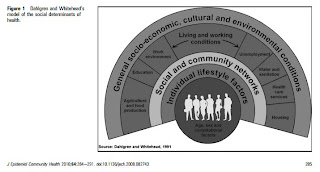
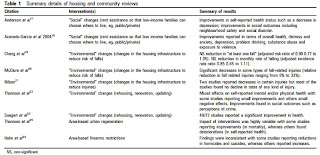
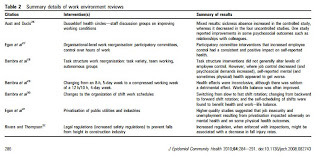
Social determinants of health
Tackling the wider social determinants of health and
health inequalities: evidence from systematic reviews
C Bambra,1
M Gibson,2
A Sowden,3
K Wright,3
M Whitehead,4
M Petticrew5


health inequalities: evidence from systematic reviews
C Bambra,1
M Gibson,2
A Sowden,3
K Wright,3
M Whitehead,4
M Petticrew5


Sunday, June 2, 2013
The Essential Supports
What are the Five Essential Supports?
School leadership: This support refers to whether principals are strategic, focused
on instruction, and inclusive of others in their leadership work. Elementary schools
with strong school leadership were seven times more likely to improve in math and
nearly four times more likely to improve in reading than schools weak on this
measure.
Parent-community ties: This support refers to whether schools are a welcoming
place for parents and whether there are strong connections between the school and
local institutions. Elementary schools with strong parental involvement were ten times
more likely to improve in math and four times more likely to improve in reading than
schools weak on this measure.
Professional capacity: This support refers to the quality of the faculty and staff
recruited to the school, their base beliefs and values about change, the quality of
ongoing professional development, and the capacity of staff to work together.
Elementary schools where teachers were highly committed to the school and inclined
to embrace innovation were five times more likely to improve in reading and four
times more likely to improve in math than schools weak on this measure.
Student-centered learning climate: This support refers to whether schools have a
safe, welcoming, stimulating and nurturing environment focused on learning for all
students. Elementary schools with strong safety and order were two times more likely
to improve in reading than schools weak on this measure.
Instructional guidance: This support refers to the organization of the curriculum,
the nature of the academic demand or challenges it poses, and the tools teachers have
to advance learning (such as instructional materials). Elementary schools with strong
curriculum alignment were four times more likely to improve in math and reading
than schools weak on this measure.
To summarize, school organization drives improvement, and individual initiatives are
unlikely to work in isolation. This has strong implications for states and districts
focused on any number of reforms that have gained increasing political currency—for
example, improving teacher quality, turning around low performing schools, or
mandating a single curriculum.
School leadership: This support refers to whether principals are strategic, focused
on instruction, and inclusive of others in their leadership work. Elementary schools
with strong school leadership were seven times more likely to improve in math and
nearly four times more likely to improve in reading than schools weak on this
measure.
Parent-community ties: This support refers to whether schools are a welcoming
place for parents and whether there are strong connections between the school and
local institutions. Elementary schools with strong parental involvement were ten times
more likely to improve in math and four times more likely to improve in reading than
schools weak on this measure.
Professional capacity: This support refers to the quality of the faculty and staff
recruited to the school, their base beliefs and values about change, the quality of
ongoing professional development, and the capacity of staff to work together.
Elementary schools where teachers were highly committed to the school and inclined
to embrace innovation were five times more likely to improve in reading and four
times more likely to improve in math than schools weak on this measure.
Student-centered learning climate: This support refers to whether schools have a
safe, welcoming, stimulating and nurturing environment focused on learning for all
students. Elementary schools with strong safety and order were two times more likely
to improve in reading than schools weak on this measure.
Instructional guidance: This support refers to the organization of the curriculum,
the nature of the academic demand or challenges it poses, and the tools teachers have
to advance learning (such as instructional materials). Elementary schools with strong
curriculum alignment were four times more likely to improve in math and reading
than schools weak on this measure.
To summarize, school organization drives improvement, and individual initiatives are
unlikely to work in isolation. This has strong implications for states and districts
focused on any number of reforms that have gained increasing political currency—for
example, improving teacher quality, turning around low performing schools, or
mandating a single curriculum.
Truly Disadvantaged Schools
Clearly, the social context of schools matters. Indeed, the authors found that
community factors accounted for most of the difference in stagnation rates among
schools. For instance, schools in communities with weak religious participation were
twice as likely to stagnate as schools in communities with strong religious
participation. Schools in communities where people did not believe they had the
ability to make a positive change were twice as likely to stagnate as schools in
communities where people believed they could. This pattern held true for social
indicator after social indicator.
Still, despite tremendous obstacles, a handful of “truly disadvantaged” schools did
improve. Over the seven-year period, 15 percent of “truly disadvantaged schools”
showed significant academic improvement. While low, these improvement rates didn’t
differ significantly from those of schools in predominantly minority communities,
which had much lower rates of crime and child abuse and higher median family
incomes.
The small group of truly disadvantaged schools that “beat the odds” and improved
suggests that community context matters, but only so far as it affects the likelihood of
developing certain organizational structures that the authors found were vital for
improvement. Whether in advantaged or disadvantaged communities, very well
organized schools improved and very poorly organized schools stagnated, the authors
found.
In short, in communities where there are few viable institutions, where crime, drug
abuse and gang activity are prevalent, and where palpable human needs walk through
the school doors virtually every day, robust efforts are necessary to ensure schools are
organized for improvement. The hopeful news is that even truly disadvantaged
schools can be organized for improvement.
community factors accounted for most of the difference in stagnation rates among
schools. For instance, schools in communities with weak religious participation were
twice as likely to stagnate as schools in communities with strong religious
participation. Schools in communities where people did not believe they had the
ability to make a positive change were twice as likely to stagnate as schools in
communities where people believed they could. This pattern held true for social
indicator after social indicator.
Still, despite tremendous obstacles, a handful of “truly disadvantaged” schools did
improve. Over the seven-year period, 15 percent of “truly disadvantaged schools”
showed significant academic improvement. While low, these improvement rates didn’t
differ significantly from those of schools in predominantly minority communities,
which had much lower rates of crime and child abuse and higher median family
incomes.
The small group of truly disadvantaged schools that “beat the odds” and improved
suggests that community context matters, but only so far as it affects the likelihood of
developing certain organizational structures that the authors found were vital for
improvement. Whether in advantaged or disadvantaged communities, very well
organized schools improved and very poorly organized schools stagnated, the authors
found.
In short, in communities where there are few viable institutions, where crime, drug
abuse and gang activity are prevalent, and where palpable human needs walk through
the school doors virtually every day, robust efforts are necessary to ensure schools are
organized for improvement. The hopeful news is that even truly disadvantaged
schools can be organized for improvement.
Subscribe to:
Posts (Atom)